ISMDN organised the decarbonisation session at IMHFC 2026
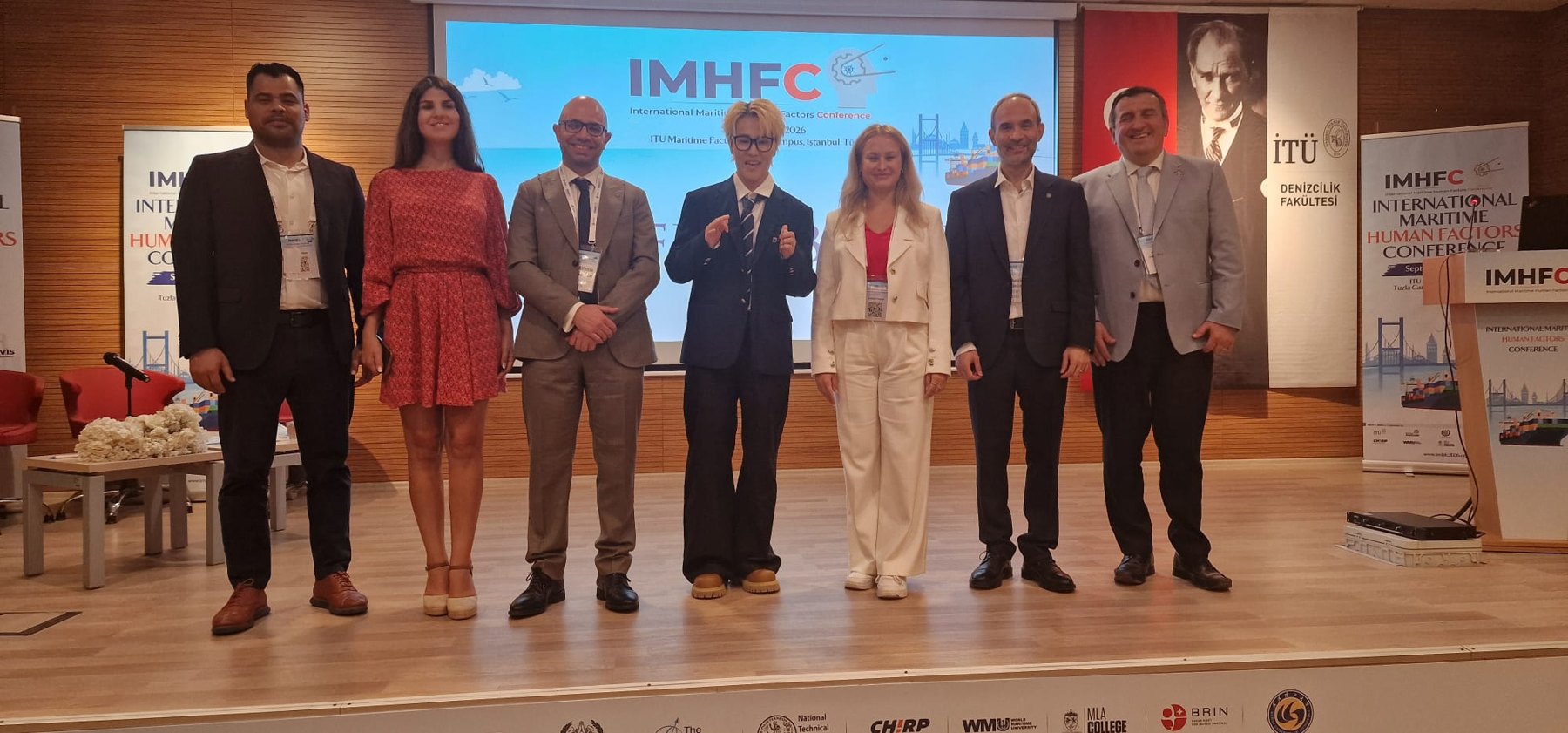
ISMDN's session on decarbonisation, alternative fuels, and the energy transition took place at the ITU Maritime Faculty on 4 September, chaired by Assoc. Prof. Dr Burak Zincir and co-organised by Prof. Elif Bal Beşikçi. Five papers, in collaboration between ISMDN and GloMDECAS, both Lloyd's Register Foundation-funded projects.
ISMDN organised a session on Decarbonisation, Alternative Fuels and Energy Transition at the International Maritime Human Factors Conference on 4 September 2026, at the ITU Maritime Faculty, Tuzla Campus, Istanbul. The session was chaired by Assoc. Prof. Dr Burak Zincir and co-organised for ISMDN by Prof. Elif Bal Beşikçi, our principal investigator at Istanbul Technical University.
Five papers were presented:
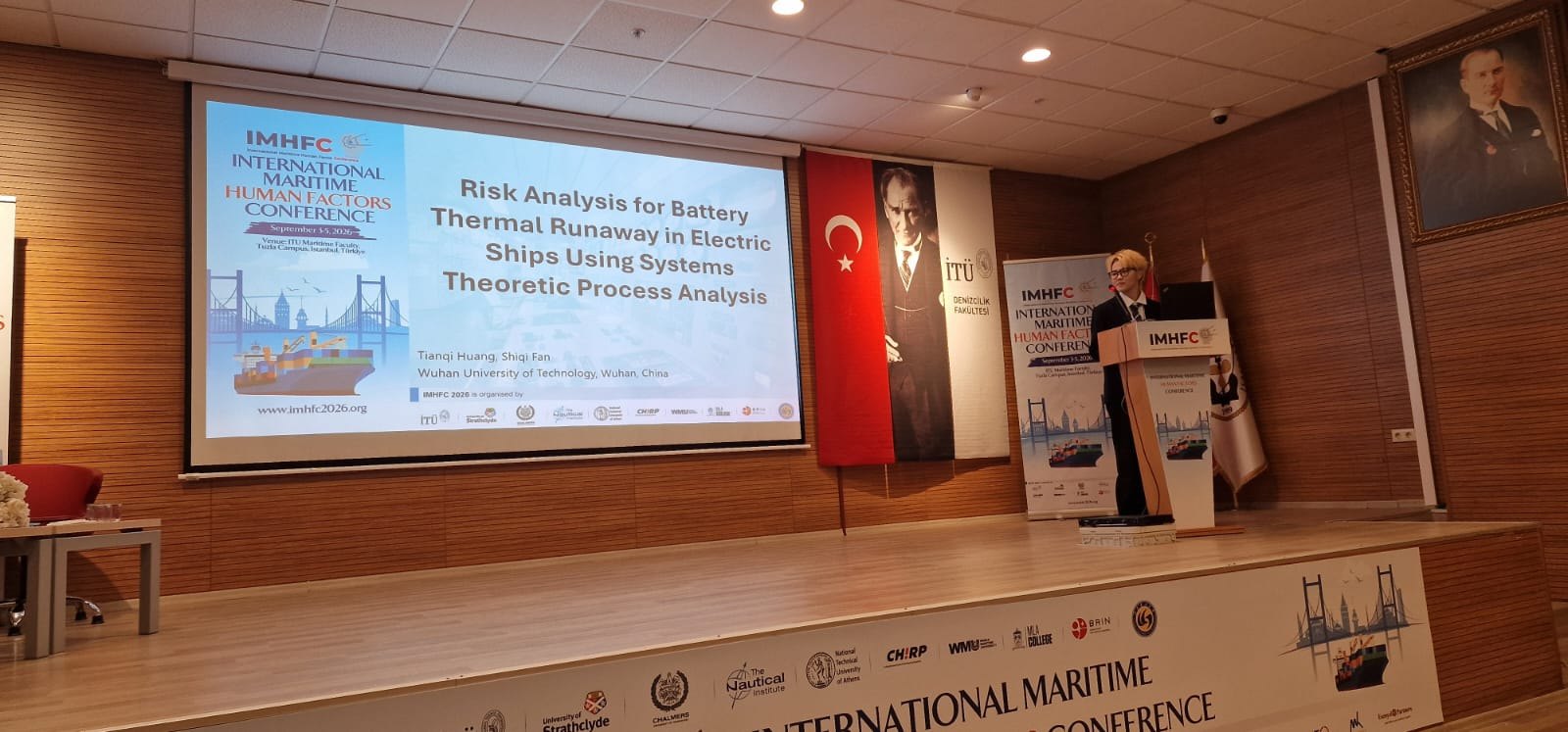
Risk analysis for battery thermal runaway in electric ships using Systems Theoretic Process Analysis, by Tianqi Huang and Shiqi Fan.
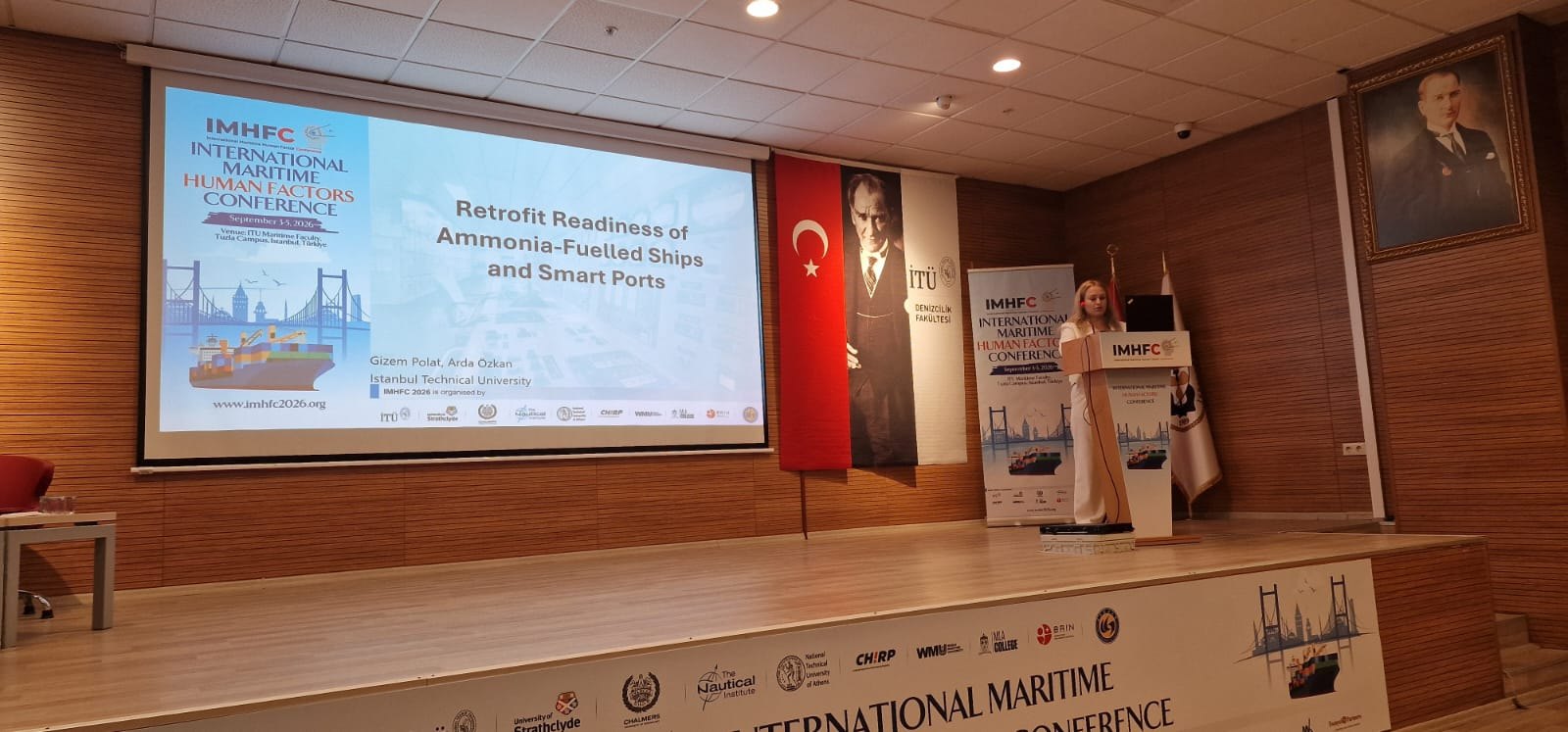
Retrofit readiness of ammonia-fuelled ships and smart ports, by Gizem Polat and Arda Özkan.
Decarbonisation trajectories in global maritime shipping: a longitudinal panel analysis of ten international carriers, 2010 to 2025, by Gerson Japhet Fumbuka, Latha Manickam, Manickam Ramasamy, Lucia Vanitha and D. Ramani Mabel.
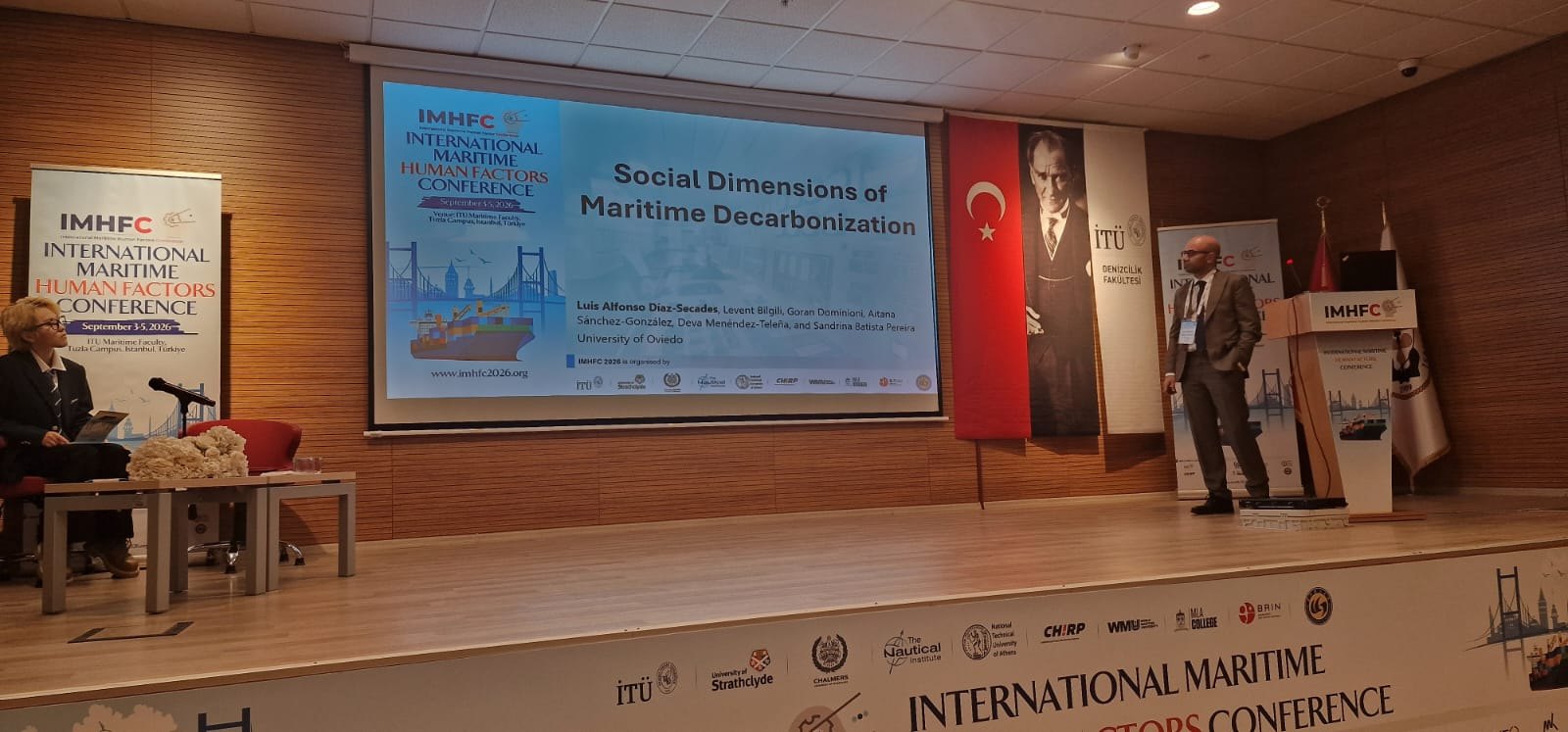
Social dimensions of maritime decarbonisation, by Levent Bilgili, Goran Dominioni, Aitana Sanchez Gonzalez, Deya Menendez Teleña, Sandrina Batista Pereira and Luis Alfonso Díaz Secades.
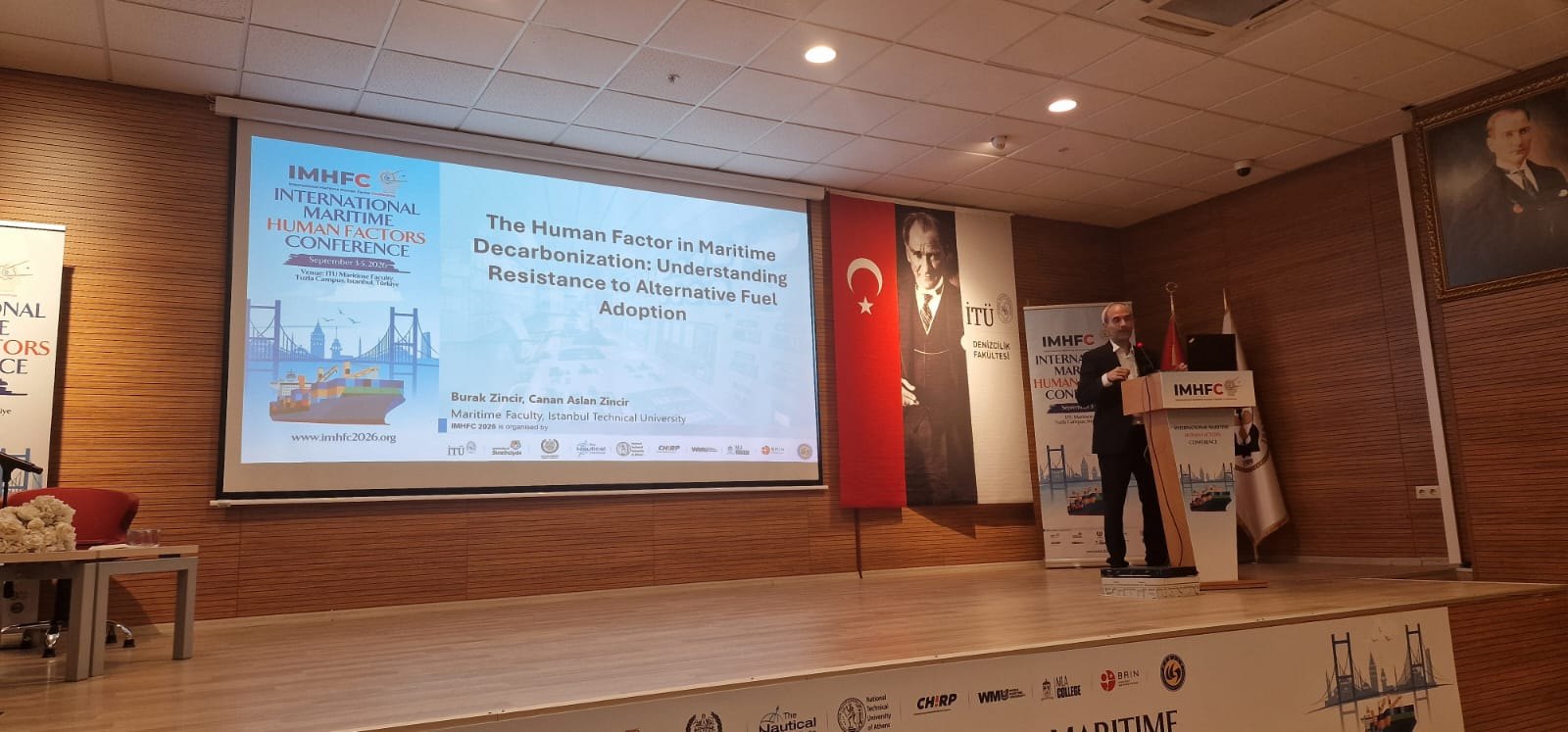
The human factor in maritime decarbonisation: understanding resistance to alternative fuel adoption, by Canan Aslan Zincir and Burak Zincir.
The session brought two Lloyd's Register Foundation projects into the same room. Luis Alfonso Díaz Secades, who presented on the social dimensions of maritime decarbonisation, works on GloMDECAS (Global Maritime Safe Decarbonisation Education for Climate Safety through Academic-Industry Synergy).
GloMDECAS is developing a training model for future seafarers that addresses maritime decarbonisation from technical, legal, and political perspectives. Its premise is that measures already in force will hold only where the people implementing them understand the whole picture, so the project focuses on properly educating that audience. Materials are being written by partners from different fields and from countries with different priorities, released open access, and supported by regional workshops and online training so that every stakeholder group can take part.
The two projects approach the same problem from different ends. ISMDN maps the safety, technology, and regulatory gaps that low- and zero-carbon fuels open up; GloMDECAS builds the education needed to carry any resulting measures into shipboard practice. Session A-5 put that overlap to use for the first time.
Gallery
Discussion
Open to signed-in network members.
Loading…