Safety & decarbonisation, charted together.
The maritime sector is late to decarbonisation, and safety cannot be retrofitted. ISMDN is a global research network closing the safety, technology and skills gaps as the fleet transitions to alternative fuels.
A network built to turn shared evidence into safer action.
Validate gaps
Mapping and validating the safety, technology and regulatory gaps across the fuel value chain.
Regional challenges
Surfacing regional skill needs and just-transition challenges, with a strong LMIC focus.
Co-create strategies
Co-developing research strategies and a living roadmap the whole sector can act on.
Global collaboration
Connecting universities, operators, regulators and class societies across eight countries.
What is happening across the network.
A selection of news, events and library highlights. Hover or tap a card to flip it.
Philippine stakeholders set out the human factors agenda for safer maritime decarbonisation
Philippine stakeholders set out the human factors agenda for safer maritime decarbonisation
More than forty participants from maritime education, industry and government, including the Philippine Coast Guard and the Maritime Industry Authority, joined the ISMDN regional workshop hosted by Panpacific University on 13 October, testing the network's findings against the country that supplies much of the world's seafaring workforce.
Read more →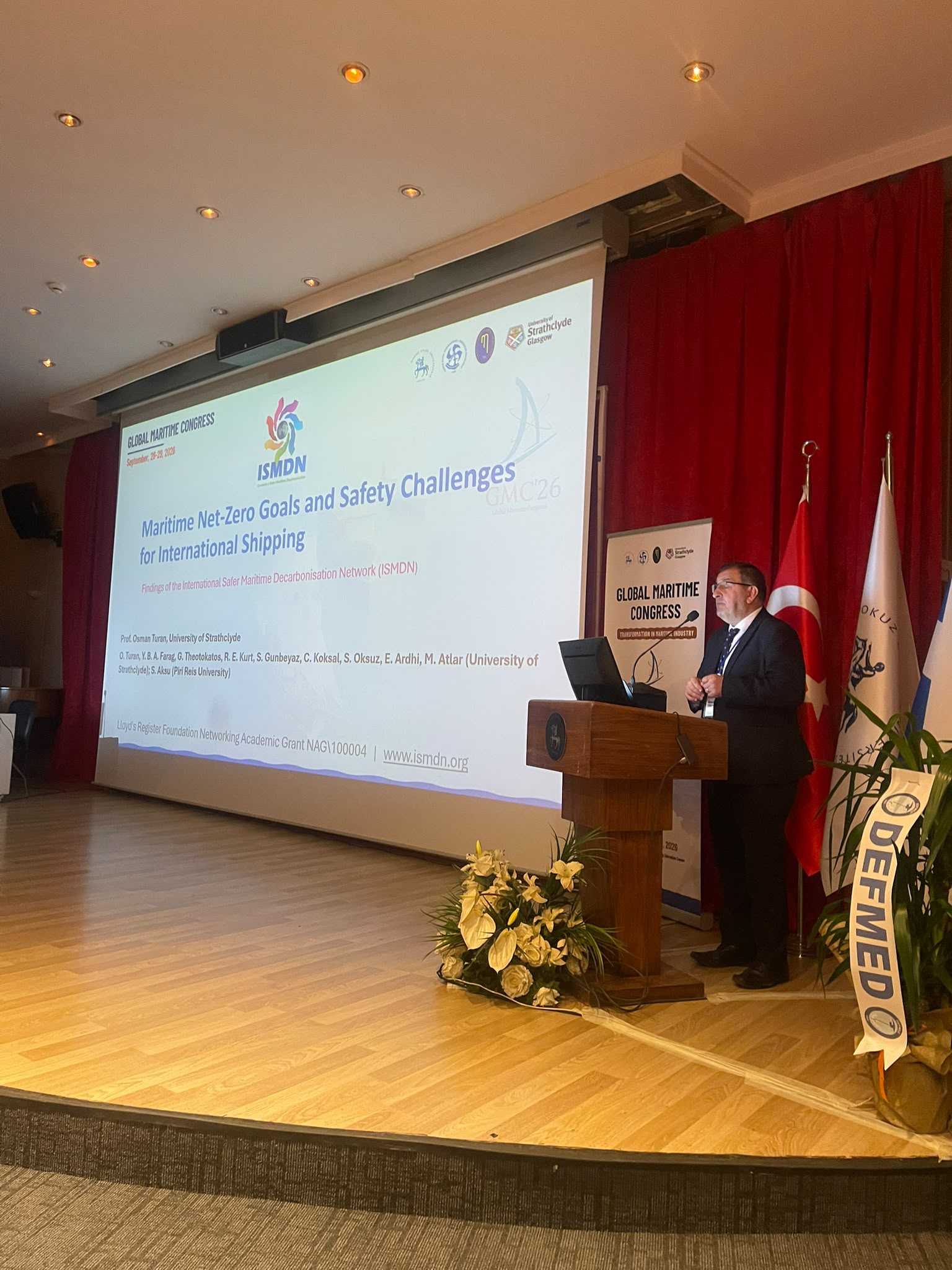
ISMDN presents the project progress at the Global Maritime Congress 2026
ISMDN presents the project progress at the Global Maritime Congress 2026
Prof. Osman Turan presented the first findings of the International Safer Maritime Decarbonisation Network at the Global Maritime Congress 2026 (GMC'26), held on 28 and 29 September in Türkiye, to an audience of 150 delegates.
Read more →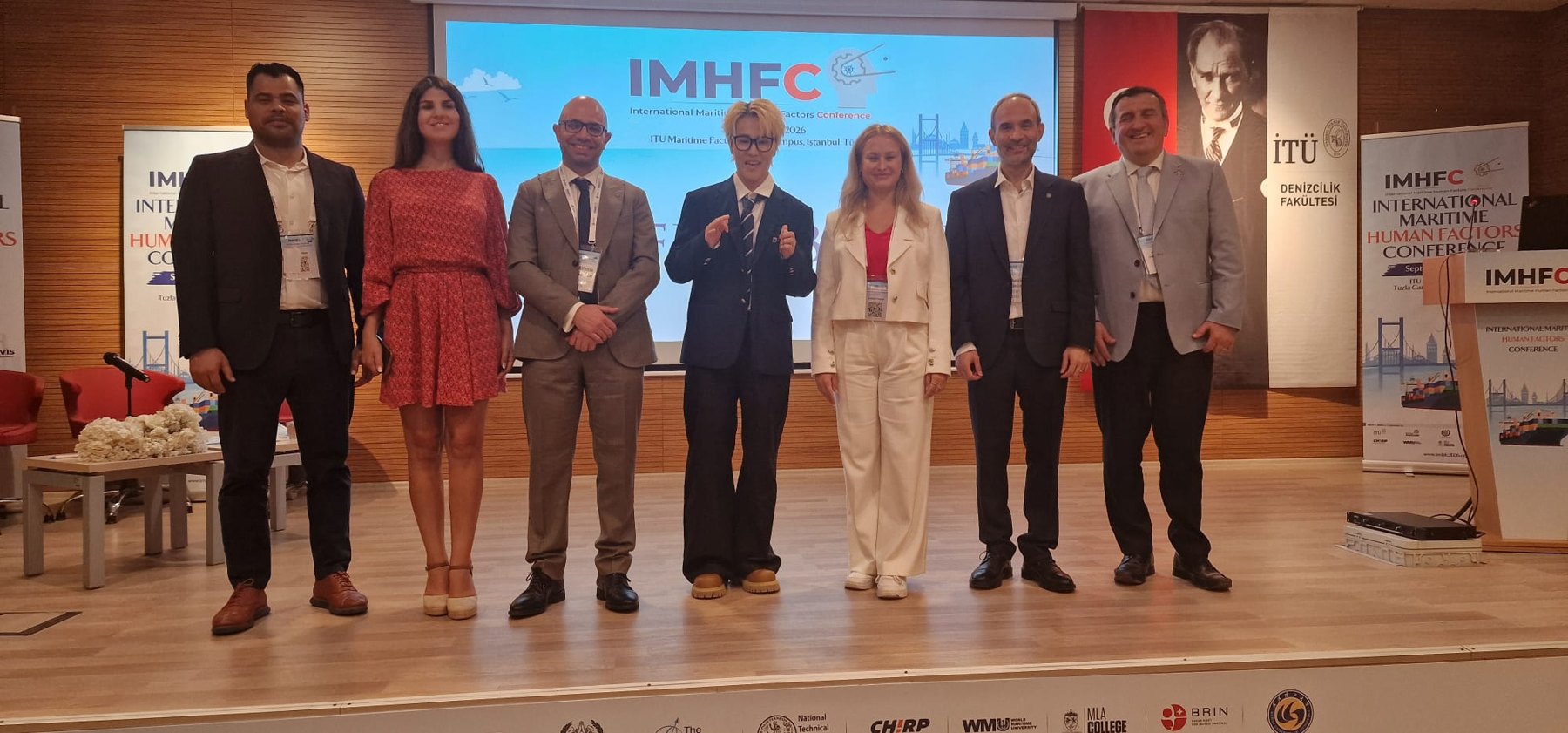
ISMDN organised the decarbonisation session at IMHFC 2026
ISMDN organised the decarbonisation session at IMHFC 2026
ISMDN's session on decarbonisation, alternative fuels, and the energy transition took place at the ITU Maritime Faculty on 4 September, chaired by Assoc. Prof. Dr Burak Zincir and co-organised by Prof. Elif Bal Beşikçi. Five papers, in collaboration between ISMDN and GloMDECAS, both Lloyd's Register Foundation-funded projects.
Read more →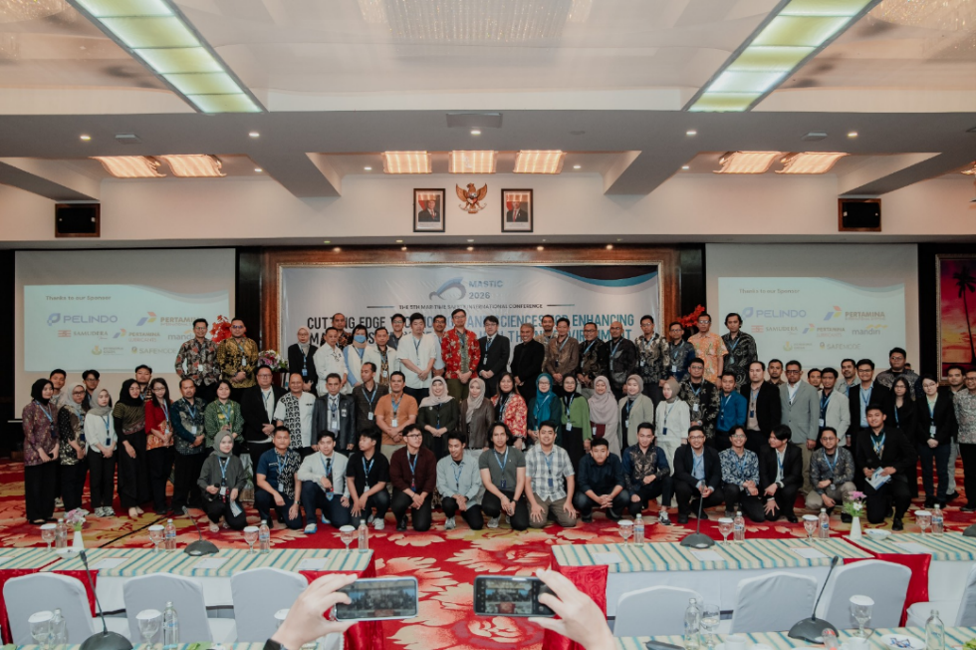
ISMDN at the 5th MASTIC Conference in Bali
ISMDN at the 5th MASTIC Conference in Bali
Our partners at Institut Teknologi Sepuluh Nopember led ISMDN's engagement at the 5th Maritime Safety International Conference in Bali, from workshops on smart navigation and decommissioning to a vessel-monitoring handover to the Klungkung Regency government.
Read more →
ISMDN to present at the AIChE Annual Meeting 2026
ISMDN to present at the AIChE Annual Meeting 2026
ISMDN will present 'Systemic Safety Gaps in Maritime Decarbonisation' at the AIChE Annual Meeting 2026, in the Sustainable Maritime Fuels and Safety session in Minneapolis this November.
Read more →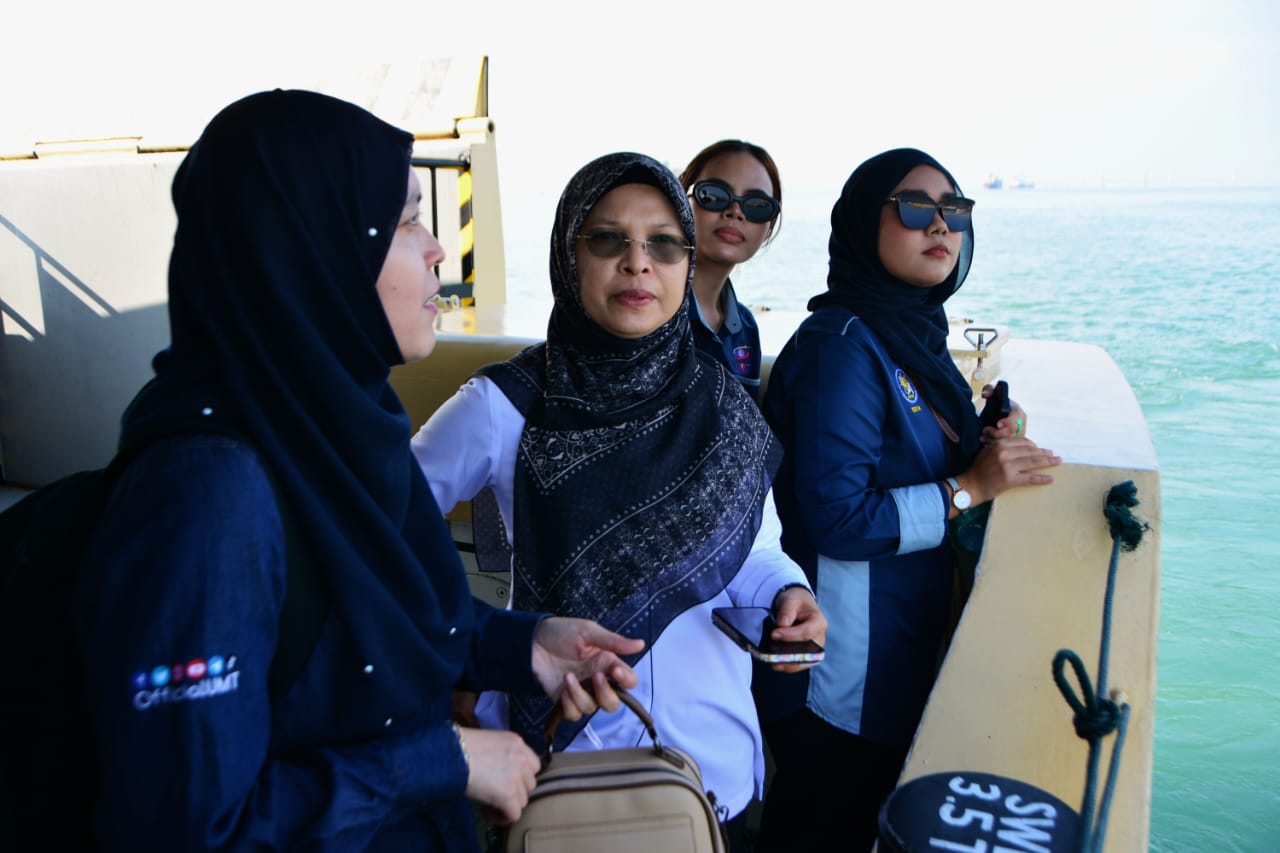
ISMDN partner UMT examines port decarbonisation at Penang Port
ISMDN partner UMT examines port decarbonisation at Penang Port
A study visit to the Penang Port Commission gathered first-hand evidence on hybrid cranes, renewable energy integration and ship waste management in a working Malaysian port.
Read more →Four themes, one safety case.
Our work is organised into four interlocking themes spanning the full alternative-fuel value chain.
Infrastructure & Logistics
Ports, bunkering and supply-chain readiness for alternative fuels, and the financial, spatial and regulatory conditions that make them safe and viable. The barrier is rarely a single technical failure, but the simultaneous absence of investment confidence, port space, evidence and regulatory obligation.
Explore theme →THEME 02Ship Design, Operations & Systems
Onboard fuel storage, engine retrofit and systems integration, replacing bespoke, project-by-project risk assessments with standardised methods, validated models and clear class and flag responsibilities.
Explore theme →THEME 03Leakage, Dispersion, Explosion & Fire
The cross-cutting safety theme for new fuels. It reframes the question from “how do we disperse gas?” to “how do we detect a leak early enough to act?”, and designs for realistic leakage rather than the fiction of zero leakage.
Explore theme →THEME 04Human Factors & Training
Design the system for the human, then train the human for the system, not the reverse. Human factors are too often retrofitted at the operational stage, leaving crews to manage unfamiliar fuels alongside legacy systems under mounting cognitive load.
Explore theme →Research & Innovation Roadmap for Safer Decarbonisation
Mapping the priority research gaps, regional skill needs and the route to closing them, turning shared evidence into a plan the whole sector can act on.
Read the roadmap · under constructionFrom evidence to action
- ◆Identify the priority research gaps across the fuel value chain.
- ◆Pool evidence and capability from partners in eight countries.
- ◆Translate findings into a shared, actionable research agenda.
- ◆Equip the sector with the skills and training to deliver it safely.